

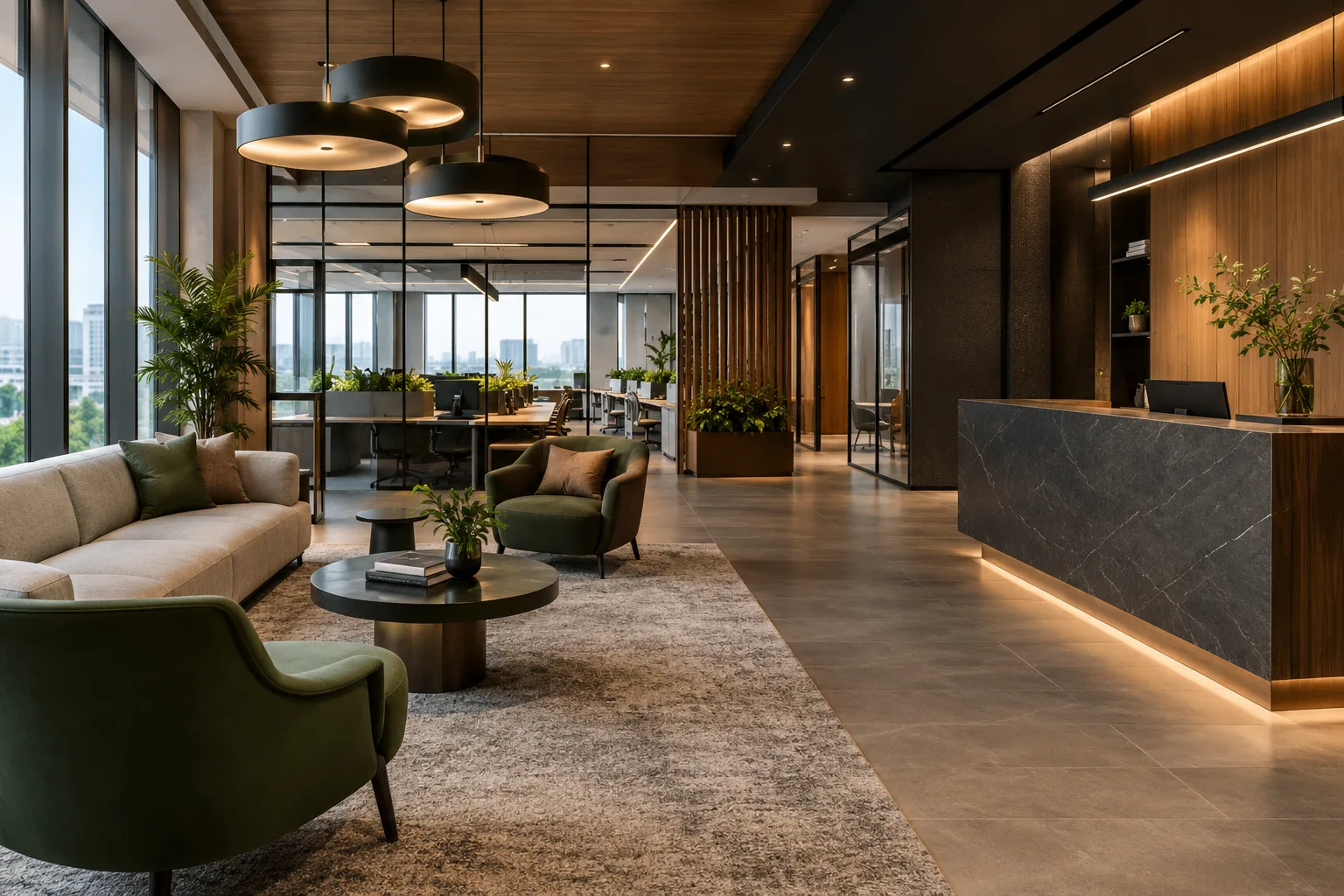
Trending Office and Commercial Interior Design Ideas
Office and commercial interior design has moved well beyond appearance alone. Businesses across every sector now treat their physical spaces as a genuine strategic asset, one that shapes employee wellbeing, supports hybrid work patterns, and communicates brand identity to clients the moment they walk through the door. This shift, however, is not superficial. Companies increasingly recognise that a thoughtfully designed workspace impacts productivity, staff retention, and how a business is perceived by everyone who enters it, from employees to prospective clients. This blog examines what is driving current trends in office and commercial interior design, walks through ten trends shaping offices and commercial spaces this year, and outlines practical steps for bringing these ideas into a space without committing to a complete overhaul.
What Is Driving Office and Commercial Interior Design Trends in 2026
Several forces are shaping commercial interior design this year, and most trace back to how work has changed. Hybrid work models remain firmly established, where offices compete with the comfort of a home setup. Employee well being has also become an important business priority. Research consistently links biophilic design and acoustic comfort to reduced stress and improved cognitive performance, giving businesses a genuine financial incentive to invest in these elements rather than treating them as optional extras. Sustainability expectations have shifted in much the same direction. Clients, employees, and regulators increasingly expect environmentally responsible material choices as a baseline requirement.
Technology has also matured to the point where smart systems integrate into interior design. Together, these forces are moving commercial spaces toward designs that are considerably more human-centred, more adaptable, and more genuinely functional than the offices of even five years ago.
Top 10 Office and Commercial Interior Design Trends for 2026
Office and commercial spaces are changing to meet the needs of modern businesses and their employees. The focus is no longer only on how a workplace looks, but also on how comfortable, practical, and adaptable it is. Here are ten key interior design trends shaping office and commercial spaces in 2026.
1.Biophilic and Nature-Inspired Design
Natural materials, indoor greenery, water features, and maximised daylight continue to anchor commercial interior design in 2026. Living walls and courtyard gardens have moved from rare showpieces to a standard request on most commercial fit out briefs. Biophilic elements consistently reduce stress and improve focus, making this one of the more evidence-backed trends on this list.
2.Flexible and Hybrid Layouts
Static desk arrangements are giving way to activity based zoning, distinct areas set aside for focused work, collaboration, and informal interaction. Many organisations now plan around unpredictable attendance patterns rather than a fixed headcount, since hybrid schedules can cause occupancy to vary considerably. This approach accommodates fluctuating headcount and varied working styles considerably better than a single, uniform floor plan ever could. Read it to know more;Common Design Mistakes to Avoid in Beauty Parlour Interiors
3.Movable Partitions and Modular Furniture
Reconfigurable walls and modular furniture systems let a single space serve multiple functions across a week. Sliding panels, foldable tables, and stackable seating are among the most common tools used without requiring a full renovation. A room set up for a team meeting on Monday can shift into a quiet focus zone by Wednesday, with no structural changes required whatsoever.
4.Acoustic Solutions Like Felt Ceilings and Acoustic Panels
Open plan offices remain popular, even though their acoustic shortcomings are now treated as a design problem to solve early rather than address later. Poor acoustics have been shown to reduce concentration and raise reported stress levels among employees. Felt ceiling systems, fabric wall panels, and sound absorbing materials are increasingly built into a space's core design rather than added as an afterthought.
5.Wellness Centric Workspaces
Dedicated relaxation zones, ergonomic furniture, and quiet rooms for rest or reflection are becoming standard features rather than premium additions. Some offices now set aside space for short naps, meditation, or simply stepping away from a screen, treating rest as part of the workday rather than a break from it. This trend reflects a broader recognition that a healthy, comfortable workforce is directly tied to business performance.
6.Warm and Inviting Materials Replacing Cold Minimalism
Sterile, all-white minimalism is giving way to warm timber tones, natural stone, and textured fabrics. Reception areas in particular have benefited from this shift, since a warmer material palette tends to leave a stronger first impression on visitors and clients. This shift produces spaces that feel welcoming rather than clinical, without sacrificing the clean lines that define good commercial design.
7.Smart Technology and IoT Integration
Occupancy sensors, smart lighting, and automated climate control are becoming standard instead of new additions. Data from these systems is increasingly used to guide space planning decisions, rather than sitting unused in a dashboard somewhere. These systems improve energy efficiency while giving facility managers genuine, real-time insight into how a space is actually being used.
8.Sustainable and Eco-Friendly Materials
Recycled materials, low VOC finishes, and responsibly sourced timber have moved from a desired feature to an expected baseline. Certifications such as LEED and WELL are now factored into leasing decisions almost as often as location or floor size. Green certified spaces are increasingly seen as trustworthy and forward-thinking by both clients and employees alike.
9.Statement and Layered Lighting
A single overhead light source no longer defines a commercial space. Dimmable and tunable fixtures also let lighting shift through the day, matching natural light levels instead of staying fixed at one brightness. Layered lighting, combining ambient, task, and accent fixtures alongside striking statement pieces, adds both visual depth and genuine functional flexibility across different areas of a room. Read more
10.Multipurpose Collaboration Zones
Spaces designed to flex between brainstorming sessions, informal meetings, and quiet work are replacing single purpose meeting rooms entirely. Furniture on wheels and writable wall surfaces make this kind of quick reconfiguration possible within minutes rather than hours. This flexibility extracts considerably more value from a limited commercial footprint. Read more
How to Bring These Trends into Your Office or Commercial Space Now
Adopting current office and commercial interior design trends does not require a complete renovation from the outset. Starting with changes that deliver the most immediate impact for the investment involved often works best. Acoustic panels, felt ceiling elements, greenery, and layered lighting can each shift how a space feels without touching the building's underlying structure. For larger updates, flexibility should take priority. Movable partitions and modular furniture let a space evolve gradually rather than lock into a fixed layout, while sustainability improvements can be phased in as existing fixtures need replacing.
At Redwood Interiors, our team helps businesses translate current office and commercial interior design ideas into spaces that genuinely work for their people and their long term goals. For more guidance on creating a functional commercial space, contact us today.
