

How to Use Lighting to Transform Office Interiors
Office design is not limited to merely desks, chairs, or colours of the walls. One factor that is frequently disregarded, yet can totally change the atmosphere of a workplace is lighting. The lighting of an office has a significant influence on employees' moods, productivity, and even the perception of your brand by clients. Proper lighting does not simply brighten up the area; it also sets the mood, delineates the areas, and promotes health.
This blog will discuss the importance of lighting as a major factor in office design, various types of lighting often used, and the difficulties that are frequently encountered in the workplaces. Additionally, it will provide pragmatic suggestions on how to accommodate lighting to different areas in the office, as well as indicate the situations when it is better to consult a professional in order to make sure that your lighting plan not only works well but also creates a good atmosphere.
Why Lighting Plays a Critical Role in Office Interior Design
Lighting is not only a practical requirement but also a design technique that office interior designers use to influence employees’ feelings, working efficiency, and overall perception of the workspace.
- Enhancing Productivity And Focus:
Properly lit rooms help reduce strain on eyes and keep employees alert during the whole day.
- Establish Brand Identity:
An office with good lighting not only gives off a vibe of profession but also attention to details, thus impressing the visitors.
- Supporting Employee Well-Being
Natural light along with carefully selected artificial light has a positive effect on mood, reducing stress, and even helps to improve sleep cycles.
- Defining And Highlighting Spaces
Light can divide the office into different areas, highlight features of the building, and create a three-dimensional effect.
If lighting is designed deliberately, it will turn out to be a powerful tool, not only in terms of function, but also in terms of aesthetics.
Choosing the right professionals is just as important as choosing the right lighting. To understand what sets experienced designers apart, explore our guide on top interior designers in Kerala and how we create functional, well-designed workspaces.
Types of Lighting Used in Office Interiors
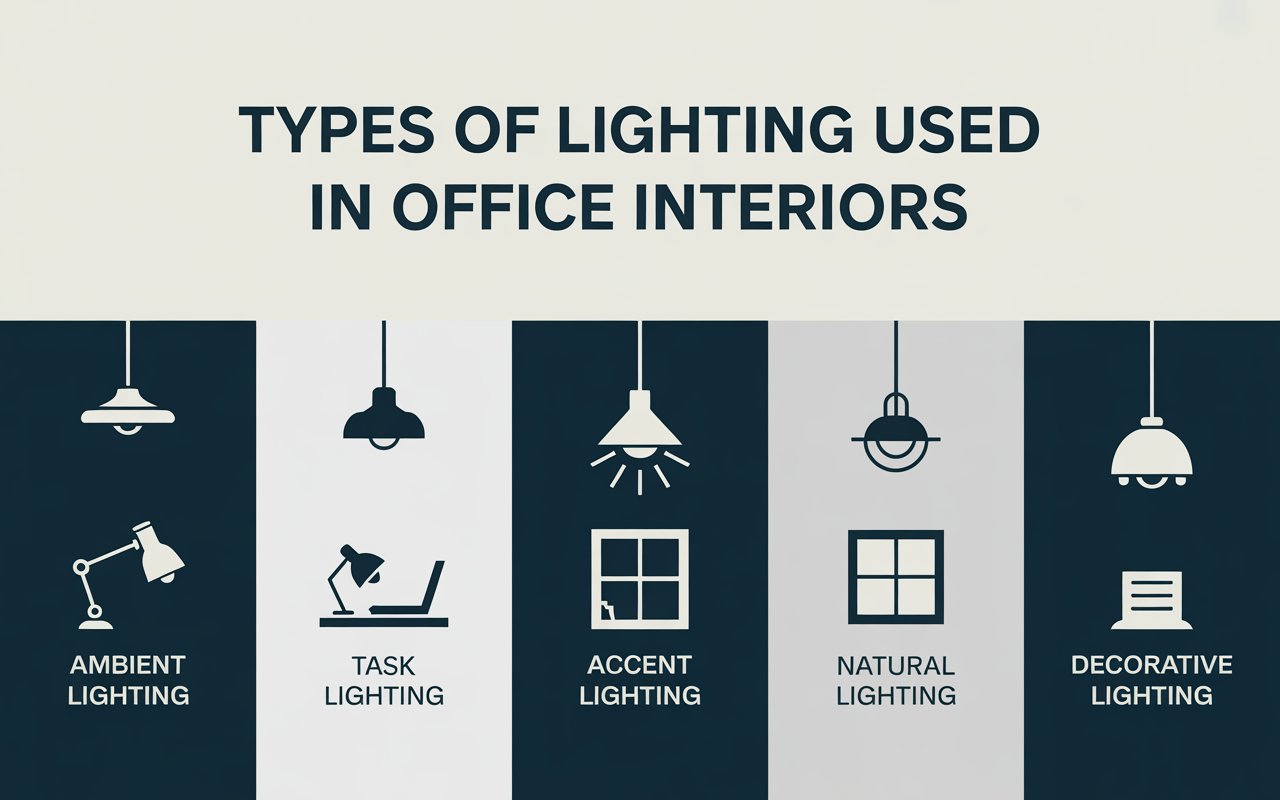
An effective office lighting design uses different types of lights to obtain a unified and adaptable atmosphere.
- Ambient Lighting
This is the overall light which usually illuminates the entire space and is achieved mostly with ceiling lights, recessed lights, or large light panels. It determines the minimum level of light.
- Task Lighting
Task lighting such as desk lamps, under-cabinet lights, or adjustable fixtures provide focused illumination for detailed work.
- Accent Lighting
Spotlights or wall washers highlight art, brand elements, or architectural features.
- Natural Lighting
Natural light coming in through windows or skylights has a refreshing impact on employees stimulating their imagination.
- Decorative Lighting
Hanging lights, chandeliers, or unique fixtures make the workplace more colourful and modern.
The secret is in mixing these types so that the office can be both efficient and attractive.
Common Lighting Problems in Office Spaces
Although lighting is a critical factor, it is frequently poorly managed in offices. The following are some of the main problems:
- Limited Access To Natural Light
Daylight exposure is significantly decreased by poor layout or lack of windows.
- Harsh Overhead Fixtures
Fluorescent lights result in glare, migraines, and general unpleasantness.
- Uneven Distribution Of Lights
Very bright areas and very dark corners create an uneven and distracting situation.
- Inconsistent Colour Temperature
Lighting that is excessively warm might give a feeling of sluggishness while lighting that is very cool would give a feeling of sterility.
- Neglecting Aesthetics
Functional lighting without design consideration turns the whole office into a bland and uninviting place.
Acknowledge these issues, and you are one step closer to transforming your office into a healthier and more interactive space.
Lighting Tips for Different Office Areas
Every office contains various zones with distinct functions. Lighting of these spaces should be in accordance with their function, mood and activities that take place there. A uniform approach is seldom effective, but certain changes can increase the efficiency and comfort of each area.
- Workstations And Open Offices
Employees spend most of their day here, so lighting must be balanced to meet comfort and efficiency. Combine ambient lighting with task lights to reduce eye strain and allow individuals to adjust brightness according to their preference. Consider using LED lights with adjustable colour temperatures like cooler tones for focus during the day, warmer tones in the evening to ease fatigue.
- Meeting And Conference Rooms
Flexibility is a necessity in these spaces. Bright and uniform light is perfect for presentations, whereas soft and dimmable light creates a relaxing atmosphere for brainstorming sessions or discussions. Installation of smart lighting systems can help to easily change modes according to the nature of the meeting.
- Reception And Waiting Areas
First impressions are crucial. The reception area needs to be inviting as well as professional. Accent lighting could focus on the brand logos, artworks, or architectural features while decorative fixtures would add personality. The warm, welcoming light comforts the visitors and establishes the company's identity.
- Break Rooms And Lounges
The lighting in these areas should bring out a calming effect as these areas are meant for relaxation. Soft and warm lights are the best choice and they should be used along with natural light, if possible. Try not to use glaring overhead fixtures. Ledge lights or wall lights can warm up the atmosphere, making it similar to a café, where the employees can take a break and get energised.
- Hallways And Corridors
Frequently neglected, these transition areas need constant ambient lighting for safety and comfort. Moreover, the installation of wall or artwork accent lights can change the atmosphere of corridors from being merely functional to being an interesting part of the office.
- Executive Offices
Professionalism and design are to be the main attributes of the executive areas. Using task lighting ensures functionality, and at the same time decorative fixtures provide a soft touch. A blend of different types of lighting, ambient, task, and accent, will create a versatile environment that is both practical and distinctive.
When lighting is customized according to particular requirements of each zone, the workplace can attain a unified design that not only helps in boosting productivity but also wellbeing, reflecting the company's culture.
Why Choose Redwood Interiors as Your Office Interior Design Partner
Lighting plays a vital role in shaping productive, healthy, and visually engaging office environments. At Redwood Interiors, we understand how the right lighting strategy enhances employee well-being, supports efficient workflows, and leaves a lasting impression on clients and visitors. Our team combines thoughtful office interior design with well-planned lighting solutions—balancing ambient, task, accent, and natural lighting—to create workspaces that are both functional and inspiring. With professional guidance and a detail-driven approach, we help transform offices into environments that reflect your brand, motivate your team, and improve the way people work every day.
