

Top 10 Home Office Design Ideas for Remote Workers
A home office can really change how your whole workday goes. If your workspace is messy or cramped, it’s easy to lose focus and feel tired much faster than you should. On the other hand, a good setup makes working feel a lot easier. It helps you concentrate, stay comfortable, and actually shut off when the day ends, something a lot of remote workers struggle with. And honestly, you don't need a full renovation to feel the difference. Swapping in better lighting, clearing off your desk, or just letting in more natural light can shift the whole mood of a room. The way your workspace looks and feels creeps into your focus more than you'd expect. After years of remote work becoming the norm, people are finally treating their home offices like the real workplaces they are. That's also why more people are reaching out to home interior designers to get it right from the start. So here are some of the best design ideas worth considering.
1. The Shift Toward Warm Minimalism
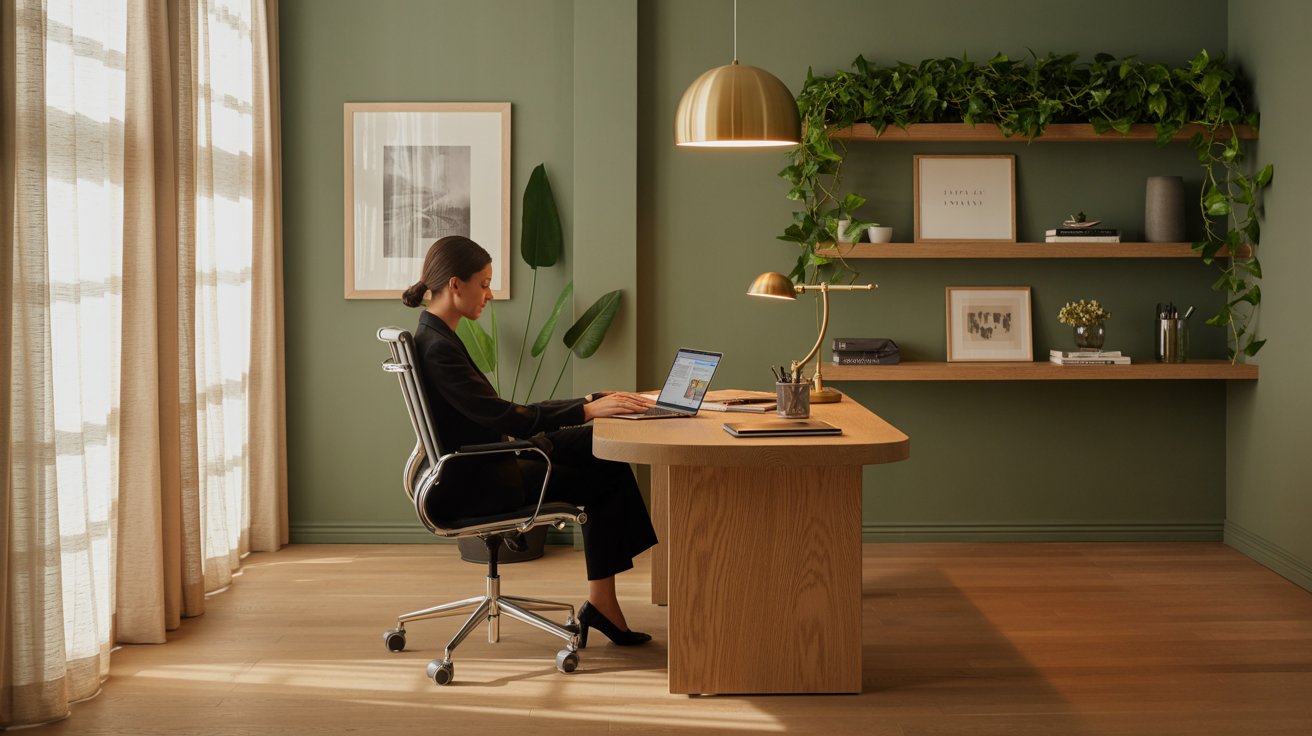
The days of cold, all-white offices that feel like hospital rooms are finally fading away. Right now, a lot of people are leaning into what you'd call warm minimalism, and it's easy to see why. It's not about making your office look like a Pinterest board. It's more about cutting out the stuff that doesn't need to be there while still making the space feel like yours. Think solid wood tones like oak or walnut, walls in something soft like sage green or warm beige, and furniture that doesn't fight for attention. It ends up feeling settled rather than staged. For long work days especially, that kind of calm environment makes a real difference because you're not mentally tired from the room itself. If you're still figuring out where your style sits, our minimalism vs maximalism blog is a good place to start
2. Mastering the Three Layers of Light
Relying on just one bright ceiling light is a fast way to end up with a headache by noon. A much better setup uses three different layers: main lights for the whole room, a desk lamp for reading, and accent lights just to make the space feel cozy. If you get an LED lamp where you can change the color temperature, you can use bright white light to wake up in the morning and a warm amber glow in the afternoon to help your brain relax. This also helps a ton with reducing eye strain. Good lighting changes how you feel and how you look on camera. We go much deeper into this in our guide on how to use lighting to transform office interiors if you want the full picture
3. Creating a Video-Ready Environment
Since video calls are now a daily routine for most of us, your background actually matters more than you might think. Having a clean, thoughtful backdrop, like a bookshelf, some artwork, or even a textured wall, can make you look way more professional while also protecting your privacy. It helps you feel more put-together and confident when you're talking to your boss or clients. You don’t need to spend a lot of money, just a tidy and intentional setup. Even small changes, like better framing or moving a lamp, can make a huge difference in how you present yourself to the world.
4. Investing in Smart Movement Desks
Sitting still in the same spot for eight hours is honestly one of the hardest things you can put your body through. A standing desk that lets you change heights with the push of a button is a huge help for your health. Some of the newer models even have power strips and wireless chargers built right into the top, which keeps messy cords out of the way. This setup encourages you to move around more, which keeps your energy up and your blood flowing. Over time, having this kind of flexibility can reduce body stiffness and improve your overall posture significantly.
5. Defining Specific Work Zones
Even if you're working out of a small bedroom, you can still find ways to create different zones. Your desk should be the main spot where all the heavy lifting happens. If you have any extra floor space, try putting a comfortable chair in the corner for reading or relaxing. Stepping away from your computer screen to read a paper or brainstorm on a notepad helps reset your brain. It prevents you from feeling trapped at your desk all day. You can also use a small rug or a shelf to visually separate these areas, making your workflow feel much more organized.
6. Prioritizing Active Ergonomics
Real ergonomics is about a lot more than just having a chair with wheels. It’s about picking furniture that supports your back while still letting you move around naturally. An adjustable monitor arm is a total game-changer because it keeps your screen at eye level so you don't end up slouching. When your body is supported correctly, you won't feel nearly as tired by the time the afternoon rolls around. Small adjustments, like the height of your chair or where your keyboard sits, play a huge role in keeping your neck and shoulders from hurting after a long work week.
7. Strategic Sound Management
Noise is usually the biggest distraction when you're trying to get deep work done. To stay focused in a busy or loud house, you really have to manage the sound in your room. Adding soft materials like thick rugs, heavy curtains, or even decorative wall panels can help block out noise from the rest of the house. These things also make your voice sound much better on calls because they stop echoes. You can also use simple fixes like a white noise machine to mask background sounds. Even moving a bookshelf against a shared wall can help create a quieter environment.
8. Bringing the Outdoors Inside
Most people naturally feel a lot better when they are around nature, and adding plants to your office is a proven way to lower stress. Hardy plants like a Snake Plant or a Fiddle Leaf Fig can clean the indoor air and give your eyes a much-needed break from the blue light of your screen. If you don't have much sunlight in your room, you can still use natural materials like stone coasters or a cork mat to get that same grounded feeling. Even one small plant on your desk can make the whole office feel a lot calmer and more alive.
9. Solving the Cable Chaos
Nothing ruins a beautiful office setup faster than a tangled mess of black wires hanging under the desk. Using cable trays or magnetic clips lets you hide every single cord from view. Having a clean floor and an empty desk surface actually helps reduce your anxiety levels while you work. When you aren't staring at a mess, your brain is free to focus entirely on the task at hand. Labeling your cables can also save you a lot of time later when you need to move things. These simple fixes keep your space neat and much easier to handle.
10. Curating Personal Inspiration
Your office should be a place where you actually enjoy spending your time. Use a small section of your wall to display things that motivate you, like photos from a trip or a piece of art you love. The secret is to be very selective with what you put out. A couple of high-impact items will inspire you, but a desk covered in random trinkets will just become a source of distraction. Try rotating these items every few months to keep the space feeling new. Even a simple quote can lift your mood during a stressful day.
Common Mistakes to Avoid
Even with the best intentions, small design mistakes can quietly ruin your comfort and productivity. A home office should support the way you work, not fight against it. When decisions are rushed or based only on looks, you often end up with a space that feels uncomfortable, distracting, or even physically draining over time. The good news is that most of these issues are easy to avoid once you know what to look for.
- Forgetting Wall Space: Many people clutter their desks when they could be using wall shelves or pegboards for storage, keeping essentials organized and the workspace clear.
- Mixing Work and Sleep: Putting a desk right next to your bed can make it hard to sleep. If you have to work in your bedroom, use a screen to hide the desk at night.
- Looks Over Comfort: A cool-looking vintage chair might look great, but if it doesn't support your back, you'll be in pain within a week.
- Bad Screen Height: Your screen should be at eye level. Looking down all day causes neck pain. Use a stand or a riser to fix your posture.
Choose Redwood Interiors as Your Partner
Building a home office that is both professional and comfortable is a pretty hard thing to do all by yourself. At Redwood Interiors, our interior designers have spent over 15 years helping people turn their homes into high-performance workspaces. We look at your specific home layout to create a custom solution. We focus on making each workspace practical, comfortable, and suited to your daily routine, ensuring better organization, improved posture, and a more enjoyable working environment overall. Our team uses 3D models so you can actually see your new office before we even start the installation. We handle everything from finding ergonomic chairs to doing the electrical work. If you're tired of working in a cramped space, contact Redwood Interiors today. Let's design a space that works.
